
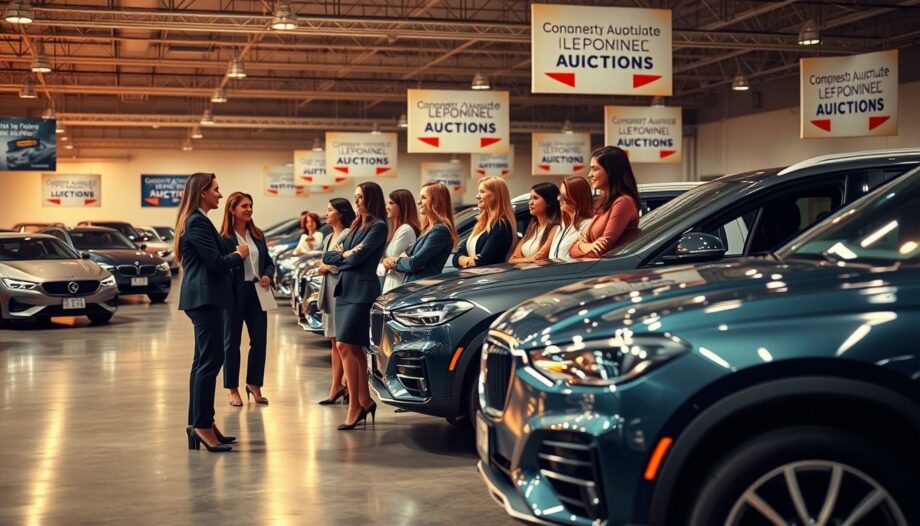
Industry data shows a significant gap. Women make over 60% of car purchases but only about 30% of bidders at traditional auctions.
This gap points to auction houses that don’t welcome female buyers. A thorough review found a few places that have made real efforts to be inclusive.
This analysis outlines the scope and usefulness of the findings. It looks at things like clear pricing, safety measures, and education for buyers. The aim is to offer trustworthy advice for entering the market smoothly.
The information benefits two main groups. It helps operators understand what works for inclusivity. And it guides buyers on how to participate with confidence.
Key Takeaways
- A significant gap exists between women’s automotive buying power and their auction participation.
- Genuine inclusivity requires specific, measurable practices beyond marketing claims.
- This review identifies venues based on verified operational criteria, not anecdote.
- The evaluation focuses on concrete factors like transparency, safety, and support.
- Findings provide a reliable guide for both buyers and industry operators.
- Objective data is essential for assessing a true buyer experience.
- Efficient market entry depends on accurate, actionable information.
Introduction to Female-Friendly Car Auction Houses

A female-friendly car auction house is a business model designed to actively engage women buyers. It goes beyond simple access. It creates an environment where women can participate with confidence and knowledge.
The rise of these venues is a direct market response. It answers a clear shift in automotive consumer demographics and spending power.
Inclusivity Addresses a Documented Market Gap and Drives Revenue
Historical data shows a gender disparity in physical auction attendance. For decades, the typical auction floor was male-dominated. This created a perception of the environment as unwelcoming or overly technical for some women.
The business case for change is strong. Inclusive auction houses tap into a large, underserved market segment. They build customer loyalty and repeat business by reducing friction in the buying process.
A transparent and supportive atmosphere benefits all buyers. It leads to more informed bidding and higher satisfaction rates.
| Aspect | Traditional Auction Environment | Inclusive Auction Environment | Key Impact |
|---|---|---|---|
| Buyer Demographics | Predominantly male | Diversified, including more women | Expands market reach |
| Atmosphere | Can be high-pressure, insider-focused | Educational, transparent, lower-pressure | Reduces buyer anxiety |
| Support Resources | Limited, self-service | Dedicated staff, guides, FAQs | Empowers novice bidders |
| Business Outcome | Relies on core repeat bidders | Attracts new buyer segments, builds loyalty | Drives sustainable growth |
Women Represent a Growing and Decisive Force in Automotive Purchases
Women influence over 85% of all vehicle purchase decisions. This statistic includes both direct buys and household choices. Their financial influence in the automotive market is substantial and well-documented.
Data from industry analysts shows women purchase nearly 45% of all new cars. They are also the fastest-growing segment of used car buyers. This purchasing power directly translates to the auction arena.
More women are participating in auto auctions than ever before. This is true for both online platforms and physical locations that adapt. The demand for women-friendly auto auctions is a logical evolution of the market.
These buyers often conduct thorough research. They value clarity in pricing, vehicle history, and transaction terms. Auction houses that provide this information clearly gain a competitive edge.
The demand for female-friendly auction spaces is driven by two converging factors. First, the proven business logic of inclusivity opens new revenue streams. Second, the undeniable growth in women’s automotive purchasing power creates the customer base.
This market evolution makes the development of welcoming auction houses not just progressive, but essential for business growth.
What Makes a Car Auction House Female-Friendly?
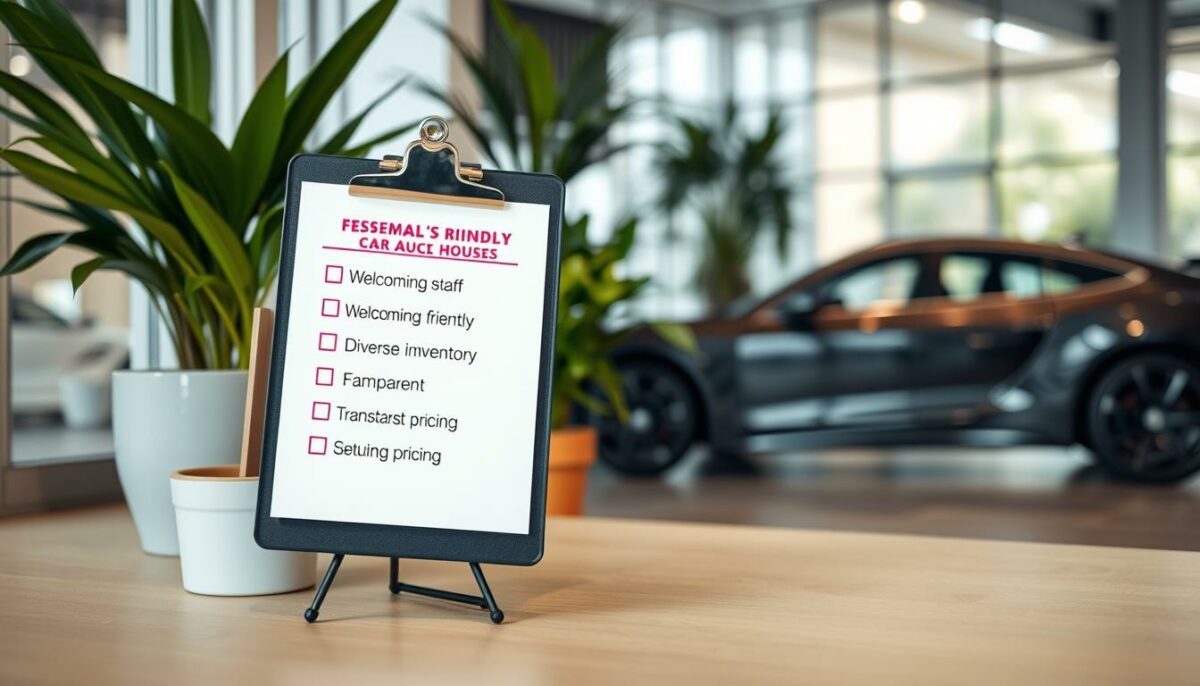
Assessing a car auction house’s friendliness to women involves looking at atmosphere, education, and support. These elements form a checklist for a fair evaluation. Criteria are verified, not based on personal opinions.
Measuring inclusivity requires observing actions and resources available. This method provides concrete metrics for buyers to evaluate.
Welcoming Atmosphere is Measured by Safety and Demographics
A welcoming atmosphere shows through clear, physical signs. It’s not just a claim. Key indicators are visible to anyone attending.
Facility safety is a primary indicator. Look for well-lit parking and visible security. Clear signs guide attendees from registration to the bidding floor.
Demographics of attendees also matter. Seeing many women, both buying and working, signals inclusivity. The layout should be easy to navigate, without feeling overwhelmed.
Use this checklist to assess the atmosphere on a preliminary visit:
| Feature | Observable Metric | Female-Friendly Indicator |
|---|---|---|
| Lighting & Security | Uniform light in all areas; patrol frequency | Feeling of safety reported by 90%+ of women visitors |
| Signage & Navigation | Clarity of directions to key areas (restrooms, bidding, exits) | Zero requests for directional assistance per event |
| Attendee Composition | Ratio of women to men in attendance | Women constitute 35% or more of the bidding audience |
Educational Resources Available Define an Empowered Buying Process
Knowledge demystifies the auction process for new buyers. Female-friendly auction houses offer specific learning materials. These resources are tailored, not generic.
“When buyers understand the process and the product, their confidence and success rate increase dramatically. Education is the single greatest tool for creating an inclusive environment.”
Standard educational offerings include pre-auction seminars. These sessions explain bidding procedures, fees, and vehicle inspection protocols. They are available in-person and via recorded webinar.
Detailed vehicle history packets are another critical resource. These documents include repair records, ownership timeline, and auction house inspection notes.
Online bidding tutorials are essential for hybrid or digital auctions. Step-by-step guides should cover registration, placing bids, and payment processing. A clear glossary of auction terms is also a fundamental tool.
Follow these steps to access and utilize educational resources:
- Review the auction house website for a “Resources” or “New Bidders” section.
- Register for any live seminars at least one week before the auction date.
- Request the full vehicle history packet for any lot number before bidding.
- Complete the online bidding tutorial if participating remotely.
Supportive Staff and Customer Service Operate on Verified Protocols
Support is shown through trained staff and responsive systems. It’s quantified by training hours and service level agreements. Customer service should be proactive, not just reactive.
Verifiable staff training protocols are crucial. Look for programs in sensitivity training, product knowledge, and conflict de-escalation. Staff should explain complex financial terms simply.
Responsive communication channels provide reliable access. Dedicated helplines for new bidders and online chat support are standard. Email inquiry response times should be published and met.
The presence of female staff in advisory or managerial roles is a strong positive signal. It shows a commitment to diversity. These staff members often mentor first-time women buyers through the process.
Evaluate support using the following channel performance metrics:
| Channel | Primary Purpose | Target Response Time |
|---|---|---|
| New Bidder Helpline | Process and policy questions | Under 5 minutes |
| Pre-Sale Email Inquiry | Vehicle-specific questions | Within 2 business hours |
| Live Chat Support | Technical bidding assistance | Under 3 minutes |
The defining trait of supportive service is staff empowerment to solve problems without escalation. This efficiency reduces buyer anxiety and builds trust in the auction house system.
Top Female-Friendly Car Auction Houses
Identifying auction houses that actively support female buyers requires examining specific features and feedback. This analysis highlights three major operators recognized for their inclusive practices. The evaluation is based on verifiable operational details, not promotional claims.
Features of Each Auction House
Key characteristics define a female-friendly environment. The table below contrasts core features of leading auction houses.
| Auction House | Atmosphere & Accessibility | Educational Resources | Staff & Customer Service | Digital Platform |
|---|---|---|---|---|
| Barrett-Jackson | Spectator-focused events with clear signage and public viewing. The “Automobilia” auction is a notable feature for smaller collectibles. | Provides online buyer guides and live seminar streams before major events. | Dedicated bidder assistance team available during auctions. | Robust website with detailed lot listings and historical results. |
| Mecum Auctions | Nationwide event schedule increases geographic access. Arena-style setup can be crowded. | Offers a “Bidder Kit” with process explanations and contract details. | On-site customer service representatives answer procedural questions. | Strong live streaming and online bidding integration via Mecum.com. |
| Manheim | Primarily a commercial wholesale platform. Physical lanes are business-to-business focused. | Extensive online training modules for registered commercial buyers. | Account managers assist with platform navigation and transaction logistics. | Industry-leading digital marketplace with condition reports and simulcast bidding. |
Barrett-Jackson creates a welcoming atmosphere for new enthusiasts. Mecum Auctions provides wide geographic access through its touring schedule. Manheim excels in digital tools for commercial transactions.
Brief Overview of Auctions
Each house conducts distinct primary sale types. Understanding these formats is essential for buyer preparation.
Barrett-Jackson specializes in collector car auctions. These are high-profile, televised events. They also run the separate “Automobilia” auction for memorabilia. Most vehicles are no-reserve, which simplifies the bidding process.
Mecum Auctions operates large live auction events across the United States. Their model includes a mix of reserve and no-reserve consignments. They auction a wide range of vehicles, from classics to modern muscle cars.
Manheim functions as a wholesale automotive marketplace. Its auctions are mainly for licensed dealers and commercial entities. Manheim offers both physical lane sales and a dominant digital platform, Manheim.com.
Reputation Among Female Buyers
Third-party review platforms and industry reports provide aggregated feedback. Sentiment focuses on transaction clarity and support.
For Barrett-Jackson, common praise from female buyers highlights the organized event flow and helpful staff. Some reviews note the high-energy environment can be intimidating for first-timers.
Mecum Auctions receives positive remarks for its straightforward registration and the availability of basic educational materials. Critical feedback sometimes mentions the fast-paced bidding at live events.
Manheim’s reputation among female commercial buyers centers on its transparent digital process. The detailed vehicle condition reports are frequently cited as a major advantage. The platform’s B2B nature means it is less tailored to retail consumer needs.
Overall, these female-friendly car auction houses are distinguished by their commitment to process transparency and buyer education. Verified user experiences confirm these traits.
Auction House Policies that Benefit Women Buyers

The most female-oriented vehicle auction sites stand out with clear, buyer-centric policies. These rules aim to reduce uncertainty and ensure a fair bidding environment. They focus on financial clarity, purchase flexibility, and transactional support.
Understanding these policies helps buyers assess a house’s commitment before registering. Below is a comparative overview of common policy implementations.
Transparent Pricing Structures
Transparent pricing eliminates hidden costs that surprise buyers at settlement. Women-friendly auto auctions provide a complete fee breakdown before bidding.
They list all fees, including the hammer price, buyer’s premium, and documentation fees. The buyer’s premium is either a fixed percentage or a sliding scale based on price. This information is detailed in the auction terms and conditions.
Reputable houses avoid hidden buyer premiums or last-minute charges. They offer a final “out-the-door” cost estimate for each lot. This helps with accurate budgeting and prevents financial overextension.
- Review the auction catalog’s terms section for the complete fee schedule.
- Calculate the total cost by adding the buyer’s premium to your maximum bid.
- Confirm if sales tax and registration fees are included or separate.
Flexible Purchase Options
Flexible options cater to different schedules and risk tolerances. These provisions are key to female-focused auction platforms.
Absentee or proxy bidding allows you to bid without being present. You set a maximum bid, and a representative executes it for you. Post-sale inspection windows allow a professional review after winning but before final payment.
Some auctions offer return policies for lots misrepresented in the description. This policy requires a dispute filed within a short, defined period. It provides a safety net against purchasing a vehicle with undisclosed major issues.
On-site financing and insurance partnerships streamline the purchase process. These services reduce the logistical burden on the buyer.
Preferred lenders often offer pre-approval processes before the auction event. This gives you a defined budget and strengthens your bidding position. Insurance agents can provide binding quotes for the specific vehicle type on the same day.
Assistance is not just a referral. The best auctions have dedicated staff to facilitate introductions and paperwork. This integrated support is a hallmark of women-friendly auto auctions.
- Contact the auction’s finance desk to inquire about pre-approval with partner lenders.
- Compare the offered rates with your pre-arranged financing to ensure a competitive deal.
- Secure a conditional insurance quote before bidding to understand the full cost of ownership.
| Policy Area | In-Person Auction | Online-Only Auction | Hybrid Auction (Online & In-Person) |
|---|---|---|---|
| Transparent Pricing | Fee sheet available at registration; buyer’s premium announced before start. | Online calculator on each lot page; all fees itemized at checkout. | Clear terms online; physical fee guides available on-site. |
| Flexible Purchase | Absentee bidding forms; 24-hour post-sale inspection common. | Automatic proxy bidding; detailed condition reports replace physical inspection. | Both absentee and online proxy bidding; limited post-sale review. |
| Financing & Insurance | On-site bank and insurer kiosks in the lobby. | Integrated online application portals with partner companies. | Online pre-approval available; physical representatives on sale days. |
The Role of Online Auctions in Promoting Inclusivity
The digital transformation of car buying is a major force for creating gender-inclusive vehicle auctions. Online platforms remove many physical and social barriers present at traditional lots. This shift enables a more objective and accessible marketplace.
Benefits of Online Auctions for Women
Online auctions provide specific advantages that appeal to female buyers. These benefits address common concerns about the traditional auction environment.
Anonymity and Reduced Pressure: Bidding remotely eliminates the feeling of being watched or judged on the auction floor. This creates a more comfortable decision-making process.
Convenience and Time Efficiency: Participation happens from any location. Buyers can review listings, research vehicles, and place bids on their own schedule.
Transparent Information Access: Detailed listings include extensive photo galleries, vehicle history reports, and Q&A sections. All bidders see the same information simultaneously.
Expanded Inventory Selection: Digital platforms provide access to a national or international inventory. This increases the chances of finding the exact vehicle model and specifications desired.
Popular Online Auction Platforms
Several major platforms dominate the online collector and used car auction space. Each has a distinct focus and community vibe. The table below compares key features of three leading sites.
| Platform | Primary Focus | Community Vibe | Key Feature for New Buyers |
|---|---|---|---|
| Bring a Trailer | Collector cars, enthusiast vehicles, classics. | Highly engaged, comment-driven community with detailed discussions. | Comprehensive listing format with extensive photo sets and transparent comment history. |
| Cars & Bids | Modern enthusiast cars (1980s to present), daily drivers. | Younger, accessible enthusiast focus with straightforward presentation. | No-reserve auctions are common, potentially offering good value. Clear, simple listing layout. |
| Copart | Salvage, clean title, and used cars for dealers and individuals. | Professional and bulk-sale oriented; requires membership for bidding. | Massive inventory volume. Buyer fees are clearly listed. Useful for project cars or flipping. |
These female-oriented vehicle auction sites operate with different rules. Review the buyer fee structure and membership requirements before registering.
Safety and Security in Online Transactions
Reputable platforms implement robust protocols to protect all parties. Understanding these systems is crucial for confident participation in gender-inclusive vehicle auctions.
Verified Payment Escrow Services: Winning bids are processed through a secure third-party escrow. The platform holds the buyer’s payment until the vehicle is delivered and accepted. This protects both the buyer and the seller.
Identity Verification Protocols: Platforms require seller and bidder verification. This often involves submitting government-issued ID and proof of address. The process reduces fraud.
Structured Dispute Resolution: Clear procedures exist for handling disputes over vehicle condition or misrepresentation. Platforms often mediate between buyer and seller to find a solution.
Follow this checklist for secure online transactions:
- Only use the platform’s official payment gateway.
- Verify the seller’s feedback rating and transaction history.
- Read the platform’s buyer protection policy in full.
- Arrange for independent vehicle inspection before payment release if possible.
How to Choose the Right Auction House
Choosing the right auction house involves a systematic evaluation to reduce risk and increase satisfaction. It’s crucial to use objective criteria and verified data. This is even more important when looking for female-friendly car auction houses that meet your needs.
Start by defining your priorities. Consider the types of vehicles you’re interested in, your budget, and the level of support you need. Then, follow these steps to narrow down your options.
Researching Auction Houses
Effective research goes beyond basic location and schedule checks. It involves auditing multiple sources to assess operations and culture.
Here are steps to gather reliable data:
- Audit website content for buyer guides, FAQs, and contact info.
- Review past auction catalogs to see inventory quality, price ranges, and descriptions.
- Analyze attendee photos and event videos for crowd diversity and atmosphere.
- Verify licensing and accreditation with state motor vehicle departments and national associations.
This due diligence shows how an auction house presents itself publicly. Consistent, transparent information is a good sign.
Questions to Ask Before Bidding
Direct inquiries provide clarity on policies and buyer support. Prepare a list of questions for auction house representatives or customer service.
Use this script to cover essential topics. The table organizes key questions by category.
| Question Category | Sample Questions | Purpose |
|---|---|---|
| Buyer Support | “Do you offer a dedicated advisor for first-time bidders?” “Is pre-auction vehicle inspection assistance available?” | Assess the level of guidance and hands-on help provided. |
| Lot Disclosure | “What is the full disclosure policy for vehicle history or damage?” “Can I obtain a third-party inspection report before bidding?” | Verify transparency and understand the condition of auction items. |
| Financing & Fees | “What financing partners do you work with?” “Are all fees (buyer’s premium, taxes, documentation) listed upfront?” | Clarify total cost and available payment options. |
| Post-Sale Process | “What is the timeline for payment and vehicle removal?” “Do you provide assistance with titling and registration?” | Plan for logistics and paperwork after a winning bid. |
Record the answers you receive. Inconsistent or vague responses may signal a lack of structured support.
Importance of Reviews and Testimonials
Independent feedback is crucial. It highlights consistent patterns in buyer experience that may not be apparent from official channels.
Cross-reference reviews across multiple platforms to identify trends. Look for comments on staff behavior, transaction clarity, and issue resolution.
Prioritize these sources for credible testimonials:
- Better Business Bureau (BBB) profiles for complaint history and resolution ratings.
- Specialized automotive forums where users discuss auction experiences in detail.
- Google Business and social media reviews for recent and unfiltered customer opinions.
Analyze reviews for specific mentions of treatment toward women buyers. Consistent positive remarks about a welcoming environment are strong indicators of a female-friendly car auction house.
Feedback patterns on independent sites often reveal the true standard of operation, separate from marketing messages.
Combine your research findings, question answers, and review analysis. This multi-angle verification leads to a confident, informed selection.
Tips for a Successful Auction Experience
To excel in gender-inclusive vehicle auctions, mastering three phases is essential: pre-auction planning, live bidding, and post-sale logistics. A structured approach minimizes uncertainty, leading to better outcomes. These steps are crucial in all auctions but are even more valuable in inclusive environments.
Preparing for the Auction Day
Thorough preparation is key to a successful bid. Complete these tasks before the auction starts.
Set a firm budget. Decide on the maximum amount you’ll spend, including the buyer’s premium and taxes. This amount is non-negotiable.
Secure financing pre-approval. Most auction houses require immediate payment. Pre-arranging funds prevents delays.
Register for bidding credentials. Complete the auction house registration process. This gives you a bidder number or paddle.
Review the lot order and vehicle listings. Study the catalog. Identify your target vehicles and note their sale times. Inspect vehicles in person or review condition reports online.
Strategies for Bidding
Discipline during the auction is critical. Follow these rules to bid effectively.
- Decide on a maximum bid before the lot opens. This is your absolute limit. Do not exceed it under any circumstances.
- Use incremental bid raises. Stick to the auctioneer’s suggested raise increments. This keeps your bidding clear and controlled.
- Avoid emotional bidding. Do not get caught in a bidding war. If the price surpasses your maximum, stop immediately.
Remain calm and signal your bids clearly to the auctioneer or through the online platform.
Post-Auction Steps and Follow-Up
The process continues after you win a bid. Prompt action ensures a smooth transaction.
Make immediate payment per house policy. Auction houses typically require payment within a few hours. Use your pre-arranged funds or approved method.
Arrange insured transport. You are responsible for moving the vehicle. Schedule a licensed and insured carrier to pick up the car from the auction location.
Complete title transfer paperwork. The auction house will provide a bill of sale and relevant documents. Submit these to your local Department of Motor Vehicles to register the vehicle in your name.
Following this sequence turns a successful bid into a finalized purchase in any gender-inclusive vehicle auctions setting.
Conclusion: Making Car Auctions Inclusive for All
The automotive auction industry has made significant strides toward inclusivity. Now, finding car auction houses that support women is a task based on clear criteria.
Reflection on the Progress Made
Objective shifts are evident. More women now hold leadership roles at major auction houses. Digital platforms have reduced traditional barriers to entry. Many female-friendly venues offer transparent pricing and flexible financing options.
Encouragement for Women Buyers
Use the provided criteria to evaluate auction houses. Leverage their educational resources on vehicle history and bidding. Engage with networks like Women’s Automotive Association International for peer support. Your informed participation drives further change.
Looking Ahead: The Evolving Landscape of Auto Auctions
Emerging technology will shape the next phase. Augmented reality for remote vehicle inspections can enhance buyer confidence. Blockchain-based title transfers may simplify secure ownership changes. These innovations promise to make the auction process more accessible and equitable for all buyers.
The search for car auction houses for women yields more options than ever. Continued demand for transparent, educational, and respectful environments ensures the industry’s evolution toward genuine inclusivity.